


Filtrer par

394 résultats
Exporter les résultats sélectionnés
Sélectionner tous les résultats de la page
-
Notice détaillée
Titre :
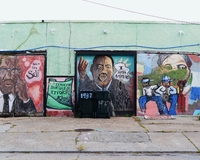
«I have a dream», Graffiti in N Prieur Street, Faubourg Tremé, New Orleans, Louisiana According to New Orleans’s official tourist agency.
Auteur :
Lo Calzo, Nicola (1979-....)Lieu de la prise de vue :
La Nouvelle-Orléans
Extrait de :
Cham, la mémoire vivante
Type :
Photographie - Couleur
Description :
«The Faubourg Tremé or as it is more frequently referred to, Tremé, is not only America’s oldest black neighborhood but was the site of significant economic, cultural, political, social and legal events that have literally shaped the course of events in Black America for the past two centuries. Yet, few outside of New Orleans except for scholars and historians know its enourmous importance to Americans of African descent ». The neighborhood has at least three dominant positive identities : as a place of unique African American cultural performance traditions ; as a place of significant African American political achievement and as a place of historic architecture. Tremé is a neighborhood of colorful parades and funerals. It a place of secondlines parades, DJs, jazz music and jazz funerals, corner bars and black Mardi Gras. Tremé is also noted for the radical political activism carried out by its Creole of Color residents in the nineteenth century. Though they may be enjoyable for both partecipants and spectators, these traditions do not exist simply to entertain. They also serve as the basis for community building and political resistence. As Stephan Nathan Haymes writes, «Within the black urban communities place making and therefore the production of public spaces is linked with day-to-day survival. But it is within the realm of day-to-day life, of daily survival, that black urban communities create public spaces that allow them to develop self-definition or social identities that are linked to a politics of resistance. Over the past forty years, Tremé’s longterm black community has chosen to fight for its culture. Michael E. Crutcher JR.
Conditions d'utilisation :
CC-BY-NC-ND - Attribution - Pas d'utilisation commerciale - Pas de modification
Provenance :

-
Notice détaillée
Titre :
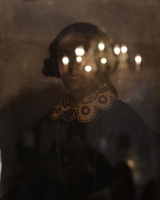
«Portrait of Lady» presumed to be a free woman of color, dated 1857, Le Musée de free people of color, New Orleans.
Auteur :
Lo Calzo, Nicola (1979-....)Lieu de la prise de vue :
La Nouvelle-Orléans
Extrait de :
Cham, la mémoire vivante
Type :
Photographie - Couleur
Conditions d'utilisation :
CC-BY-NC-ND - Attribution - Pas d'utilisation commerciale - Pas de modification
Provenance :

-
Notice détaillée
Titre :
Éric Rosemain, éleveur et propriétaire du pitt Thomassin, Barrière-la-croix, Sainte-Anne, 2011.
Auteur :
Charlotte, Robert (photographe)Lieu de la prise de vue :
Sainte-Anne
Date :
2010
Extrait de :
Véyé Lavi'w
Type :
Photographie - Couleur
Conditions d'utilisation :
CC-BY-NC-ND - Attribution - Pas d'utilisation commerciale - Pas de modification
Provenance :
-
Notice détaillée
Titre :
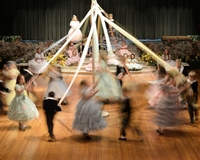
“The British” scene, Natchez Historic Tableau, Mississippi.
Auteur :
Lo Calzo, Nicola (1979-....)Lieu de la prise de vue :
Natchez
Extrait de :
Cham, la mémoire vivante
Type :
Photographie - Couleur
Description :
Extraits from the Tableau schedule: «Be transported to the shores of Ole Man river with the arrival of the Showboat. Celebrate spring while children dance around a Maypole. Witness romance as couples weave intricate waltzes at 1850s soiree. And bid the era adieu when the queen of the ball says farewall to her Confederate sweetheart» / «The May Festival and Maypole Dance were a lovely early custom enjoyed by children of English descent in long ago Natchez was the celebration of spring was marked each year with May Day, a social event especially popular in England. The day of celebration included children dancing around a birghtly bedecked May Pole».
Conditions d'utilisation :
CC-BY-NC-ND - Attribution - Pas d'utilisation commerciale - Pas de modification
Provenance :
